How Gutter Repair Helps Protect Attics and Ceilings
@garrettfpze100
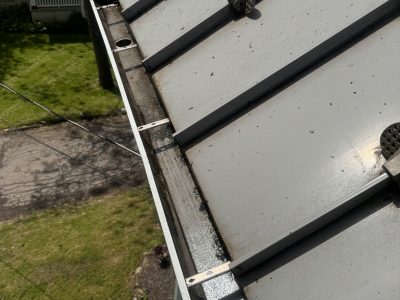

A roof sheds water. Gutters finish the job.
That sounds simple, but it is the part many homeowners underestimate. When gutters pull away from the fascia, clog with debris, develop pinholes, or lose their slope, rainwater stops moving where it should. Instead of traveling safely away from the house, it spills over edges, backs up under shingles, runs behind the gutter, or pours too close to the foundation. One of the first places that trouble shows up is overhead, in the attic and on the ceilings below.
After enough service calls, a pattern becomes hard to ignore. Someone notices a brown ceiling stain in a hallway after a storm. Another homeowner smells mustiness in the attic but cannot find a plumbing leak. A third sees peeling paint around the upper corners of a bedroom and assumes it is humidity. Then the inspection starts, and the same culprit appears again and again: neglected or failing gutters.
Gutter repair is often treated like minor exterior maintenance. In practice, it acts more like a protective system for the roofline, the attic insulation, the ceiling drywall, and even the framing hidden behind those finishes. Small defects at the edge of the roof can create expensive interior damage, especially when they are left alone through multiple storms and seasonal freeze-thaw cycles.
The hidden path water takes when gutters fail
Water rarely stays where it first enters. That is why gutter problems can be deceptive.
When a gutter overflows, many people expect damage to appear on the siding. Sometimes it does. Just as often, the water follows less obvious routes. It can wick behind fascia boards, soak the roof sheathing near the eaves, and seep into soffit cavities. From there, moisture can migrate into attic insulation or run along framing members before finally appearing as a stain several feet away from the actual entry point.
This is one reason ceiling leaks feel so mysterious. The wet spot in a second-floor bedroom may not be under a puncture in the roof. It may be the endpoint of water that entered where a sagging gutter held standing water against the edge of the roof.
The attic is especially vulnerable because it sits directly beneath the roof deck and often contains absorbent insulation. Fiberglass, cellulose, and wood framing do not need a dramatic flood to suffer. Repeated dampness is enough. A minor overflow during every heavy rain can slowly compress insulation, reduce its thermal performance, stain rafters, and encourage microbial growth on wood surfaces. Once the attic environment changes, the ceiling below becomes the next weak link.
Why the attic often shows damage first
Attics are not finished living spaces in most homes, so early warning signs tend to go unnoticed. You do not sit there every evening. You do not always notice a new damp patch on roof decking or a slight mildew odor near the hatch. By the time someone investigates, the problem may have been active for months.
Water intrusion from gutter issues usually starts near the eaves. That area matters because it is where the roof, fascia, soffit, and ventilation details all meet. If water consistently backs up at the edge, several things can happen at once.
The roof sheathing can absorb moisture and begin to soften. Fascia boards can rot where gutter fasteners are anchored. Soffits can swell or delaminate. Insulation at the perimeter of the attic can become wet and matted down. When insulation gets soaked, it loses effectiveness, and that can make the attic colder in winter and hotter in summer. A colder attic edge raises the chance of ice dam formation in cold climates, which adds another water entry pathway.
Once moisture is present, air movement spreads the effect. Humid attic air can condense on cooler surfaces. Nails protruding through the roof deck may rust. Wood can darken. Over time, a house can develop not just a leak issue, but also an energy efficiency problem and a material durability problem.
I have seen attics where the only visible clue was a narrow dark line on the roof sheathing above the exterior wall. No puddles, no active drip during a dry inspection. Yet the insulation beneath that area was damp enough to squeeze moisture from it by hand. The homeowner had assumed the problem was an isolated roof shingle issue. The real problem was a section of gutter that had lost its pitch and held water after every storm.
Ceilings are often the messenger, not the source
Ceiling damage gets attention because it is visible, inconvenient, and hard to ignore. Stains spread across paint. Tape joints in drywall begin to show. Texture bubbles. In severe cases, plaster or drywall sags. By then, the moisture has usually been active for longer than anyone would like.
What makes gutters relevant here is their role in preventing water from gathering at the vulnerable edge of the roof system. A well-functioning gutter reduces the amount of runoff that can curl backward, seep into joints, or saturate trim. A damaged gutter does the opposite. It concentrates failure at one of the most exposed parts of the home.
The most common ceiling symptoms linked to poor gutters include discoloration near exterior walls, peeling paint at upper corners, soft drywall, and recurring stains after wind-driven rain. In two-story homes, upper-floor ceiling issues are common. In one-story homes, damage may show in hallways, bedrooms, or living rooms near eave lines. Cathedral ceilings can be particularly tricky because there is less attic space to buffer or reveal the problem.
Homeowners sometimes repaint a stain and hope it was a one-time event. That rarely ends well. If the gutter problem remains, the stain usually returns, and the repair bill grows from cosmetic work to material replacement.
The most common gutter defects that lead to interior water damage
Not every gutter issue carries the same level of risk. Some are mostly aesthetic. Others create a direct line to attic and ceiling damage.
Here are the defects that most often matter:
- Improper slope that leaves water standing in the gutter instead of moving toward the downspout.
- Clogs from leaves, seed pods, roofing granules, and debris that force water to overflow at the front or back.
- Loose or separated sections that allow water to spill behind the gutter onto fascia and soffit materials.
- Leaking seams and end caps that drip repeatedly onto the same vulnerable areas.
- Short or poorly placed downspouts that discharge too close to the structure and contribute to splashback and saturation.
Each of these problems can start small. A few loose spikes, a slight dip in one run, a seam that drips only during heavy rain. The reason they deserve attention is repetition. Water damage inside homes usually comes from repeated exposure, not one dramatic storm. The storm simply reveals what the gutter system has been failing to control for months or years.
Overflow is not the only threat
Most people think of gutters in terms of front-edge overflow, where water spills visibly over the lip like a waterfall. That certainly happens, especially during heavy rain and with clogged systems. But some of the worst damage comes from water running behind the gutter.
This usually happens when gutters are detached from the fascia, installed too low, or overwhelmed by volume and debris. Instead of entering the trough cleanly, runoff slips between the back edge of the gutter and the fascia board. From there, it can soak wood trim, enter soffit panels, and work its way inward toward attic spaces.
Backflow problems are easy to miss from the ground. You may never see dramatic spilling. What you might notice instead is peeling exterior paint, dark streaks on fascia boards, or soft wood where the gutter is fastened. Inside, the clue could be a faint ceiling stain that appears only after wind-driven rain from one https://www.google.com/maps?cid=3999183471512401406 direction.
That directional detail matters. If a leak appears mainly after storms that hit a certain side of the house, gutter alignment and attachment on that elevation deserve a close look.
Seasonal stress makes minor problems worse
Gutters do not fail in a vacuum. Weather pushes weak systems over the edge.
In autumn, debris builds up faster than many homeowners expect, especially if nearby trees shed leaves, needles, blossoms, or seed pods in stages. One cleaning in early fall may not be enough. A partially clogged outlet can turn a functional gutter into a trough of standing water within a week.
In winter, trapped water can freeze and expand. That extra weight strains hangers and opens joints. Ice can also force water backward under roof edges, especially where attic insulation or ventilation is already underperforming. In spring, heavy rains test every seam and slope error. In summer, intense sun and thermal movement can widen small cracks and loosen older sealants.
The result is cumulative damage. A gutter that only dripped last year may pull away from the fascia this year. A small fascia stain becomes rot. Rot reduces fastener holding strength. The gutter loosens more, and the cycle accelerates.
This is one reason timely gutter repair is more cost-effective than repeated patching indoors. Fixing drywall stains while ignoring the failing drainage path above them is like drying a floor while leaving the window open in a storm.
What proper gutter repair actually addresses
Good repair work is not just smearing sealant on a leak. It starts with diagnosis. Why is water escaping the system, and where does it go next?
A professional assessment typically looks at pitch, attachment points, seams, outlets, downspout capacity, roof runoff volume, and the condition of adjacent fascia and soffit materials. In some cases, the gutter itself is salvageable, but the supporting wood behind it has deteriorated and can no longer hold fasteners properly. In other cases, the gutter run is intact, but one low section causes chronic standing water and overflow.
Repair may involve rehanging sections to restore proper slope, replacing failed hangers, resealing joints, installing new outlets, correcting downspout discharge, or replacing localized sections that have rusted through or cracked. Where wood rot is present, trim repair may need to happen before the gutter can be resecured.
A thoughtful repair also considers capacity. Some homes have undersized gutters for their roof area or for the intensity of local rainfall. On steep roofs, runoff can shoot past the gutter if placement is poor. On long rooflines, too few downspouts can create bottlenecks. The right fix is not always to repair what is there exactly as it was. Sometimes the better judgment is to modify the system so it can handle real conditions, not ideal ones.
Signs homeowners should not ignore
You do not need to wait for water to drip through a light fixture to take gutters seriously. Several warning signs suggest that gutter repair may be protecting more than just the exterior appearance of the house.
Pay attention to these conditions:
- brown or yellow ceiling stains near exterior walls
- peeling paint or bubbling drywall at the upper edge of a room
- musty odors in the attic or damp insulation near the eaves
- gutters that sag, separate, or spill water in specific spots during rain
- rotted fascia, stained soffits, or mildew on exterior trim below the roofline
One sign alone does not prove the gutters are at fault, but a pattern is meaningful. If interior stains and exterior drainage issues appear on the same side of the house, they should be evaluated together.
Repair versus replacement, a judgment call
Not every damaged gutter can or should be repaired. The decision depends on age, material, extent of deterioration, and whether the existing design was adequate in the first place.
Aluminum gutters with a few separated joints, loose hangers, or a minor pitch problem are often strong repair candidates. Steel gutters with widespread rust, perforations, and failing seams may be poor candidates for repeated patching. Vinyl gutters can be economical, but in climates with large temperature swings they may become brittle or pull apart at joints over time. Copper systems are long-lasting but require skilled repair to justify the material value.
The condition of nearby materials also matters. If the gutter failure has already caused fascia rot, soffit damage, or saturated roof sheathing, the scope becomes broader than gutter work alone. In those cases, repair timing is critical because hidden structural deterioration tends to grow quietly.
There is also the question of recurring maintenance. Some homes under heavy tree cover need frequent cleaning, no matter how well the gutters are installed. Guards can help in certain settings, but they are not universal solutions and still require inspection. Fine debris can accumulate on top of some guard styles or wash into the trough over time. The right recommendation depends on roof type, tree species, storm exposure, and maintenance habits.
A small repair can prevent a large chain of costs
When homeowners postpone gutter repair, they often do so because the immediate issue seems manageable. A little dripping during rain. A bit of overflow at one corner. A stain that is still only the size of a hand. The problem is that water rarely damages only one thing.
A neglected gutter issue can lead to wet insulation, increased heating and cooling costs, mold remediation, drywall replacement, repainting, fascia repair, soffit replacement, and in severe cases, partial roof-edge carpentry. If moisture reaches electrical fixtures in a ceiling, safety concerns enter the picture as well.
Costs vary widely by region and house design, so exact numbers are hard to generalize responsibly. But the pattern is consistent. Exterior drainage repairs are usually less expensive than interior restoration after prolonged water intrusion. Spending a few hundred dollars on targeted gutter repair can be what prevents several thousand dollars of hidden damage from developing overhead.
That financial comparison becomes even sharper in homes with finished attics, custom ceiling textures, hardwood floors beneath a leak path, or insulation upgrades that would need replacement if soaked.
Why inspections after storms matter
The best time to judge gutter performance is during or immediately after substantial rain. That is when slope, overflow points, and discharge problems reveal themselves. A dry-day inspection can show condition, but it cannot always show behavior.
If it is safe to observe from the ground, watch where water exits downspouts, where it spills over, and whether any section appears to hold standing water once the rain stops. Inside, inspect the attic soon after heavy weather for damp insulation, darkened wood, or fresh staining. A moisture meter can be helpful, but even simple visual checks often catch problems early.
Wind-driven storms deserve extra attention because they test the weak points between gutter, fascia, and roof edge. A house that handles straight rainfall well may still have vulnerable corners or transitions where water can push behind the system.
One practical habit I recommend is taking dated photos of suspicious areas, inside and out. A ceiling stain that looks unchanged may actually be spreading slowly. A gutter sag that seems minor can worsen over a single season. Photos bring clarity where memory often smooths things over.
The value of doing the repair before attic and ceiling symptoms appear
The most cost-effective gutter repair is often the one done before there is any interior evidence at all. That may not feel urgent in the moment, but it is the smartest point to intervene.
Once ceilings stain, drywall softens, or attic insulation gets wet, the job is no longer just about water control. It becomes restoration. Materials must dry fully. Damaged sections may need removal. Mold concerns may require containment and cleaning. Paint and texture have to match existing finishes. What could have been a straightforward exterior correction turns into a multi-trade project.
There is also the comfort factor. Wet attic insulation and air leakage at the eaves can change how rooms feel. Upper floors may become draftier in winter or harder to cool in summer. Occupants notice the symptom, thermostat adjustments follow, and utility bills inch upward without anyone connecting the change back to a gutter line outside.
Protecting the house starts at the roof edge
A home does not need a dramatic roof failure to suffer water damage. Sometimes all it takes is a neglected gutter run on one side of the house and a season of hard rain.
Gutter repair protects attics and ceilings because it preserves the path water is supposed to follow. It keeps runoff from backing up into roof edges, from slipping behind fascia boards, and from soaking the hidden materials that hold a house together. It reduces the odds of wet insulation, mold-prone attic conditions, ceiling stains, peeling paint, and costly interior repairs.
For homeowners, the practical takeaway is straightforward. If gutters sag, leak, overflow, or detach, treat that as more than a cosmetic annoyance. The damage they prevent is mostly out of sight, until it is not. By the time a ceiling announces the problem, the attic has often been dealing with it for a while.
A repaired gutter may not seem as satisfying as a remodeled room or a new front door, but few maintenance tasks do more to protect the parts of a home you never want rain to reach.
Just Gutters LLC
262 Main St
Hackettstown, NJ 07840, United States
Phone: +1 201-331-9454
FAQ About Gutter Repair
Is it cheaper to repair or replace gutters?
Repair can cost less when damage is limited and the remaining system is sound. Replacement may offer better value when leaks, corrosion, or repeated failures affect several sections. An inspection and written estimate can help compare the options.
Can damaged gutters be repaired?
Many localized problems, including leaking joints, loose brackets, sagging sections, and damaged downspout connections, can be repaired. The best approach depends on the material, extent of damage, and condition of the mounting surface.
Can I repair gutters myself?
Simple ground-level checks may help identify a problem, but roof-edge work carries fall risks and may require specialized tools. Professional assessment is advisable for high gutters, loose sections, hidden wood damage, or uncertain drainage problems.